TAFE Queensland SkillsTech Pathways · recovered 2015 artefacts
Facilitated exploration environment
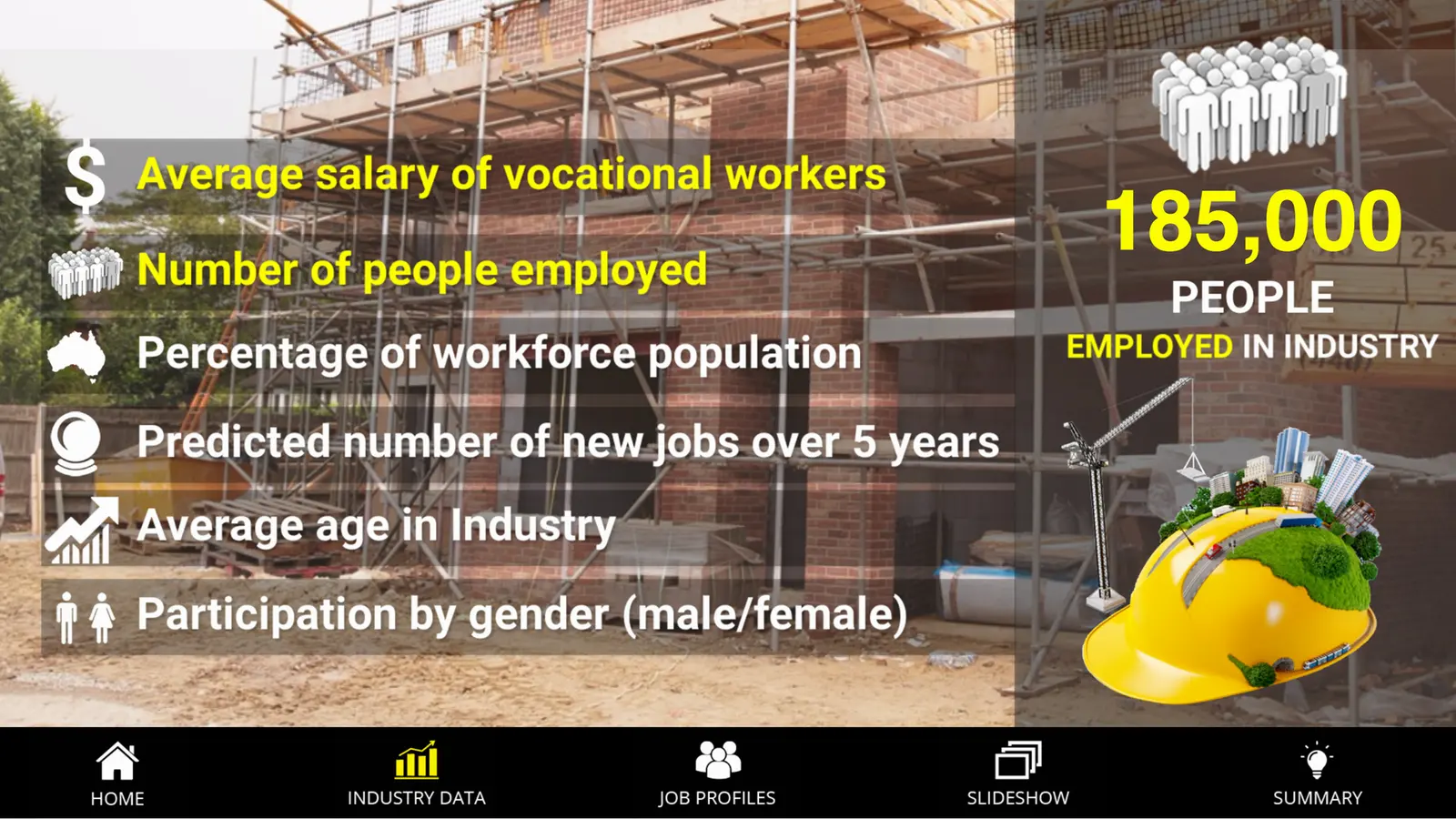
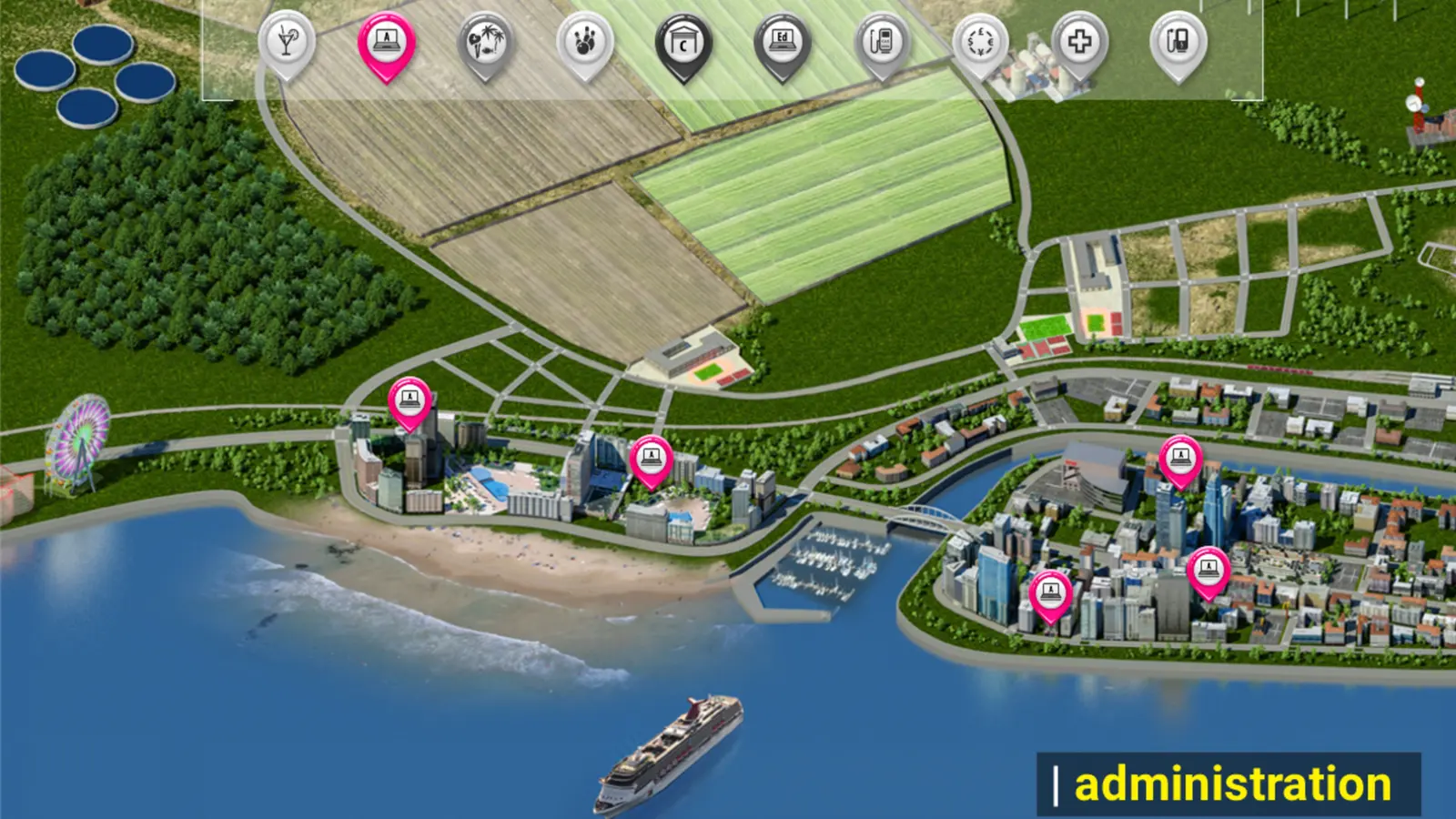
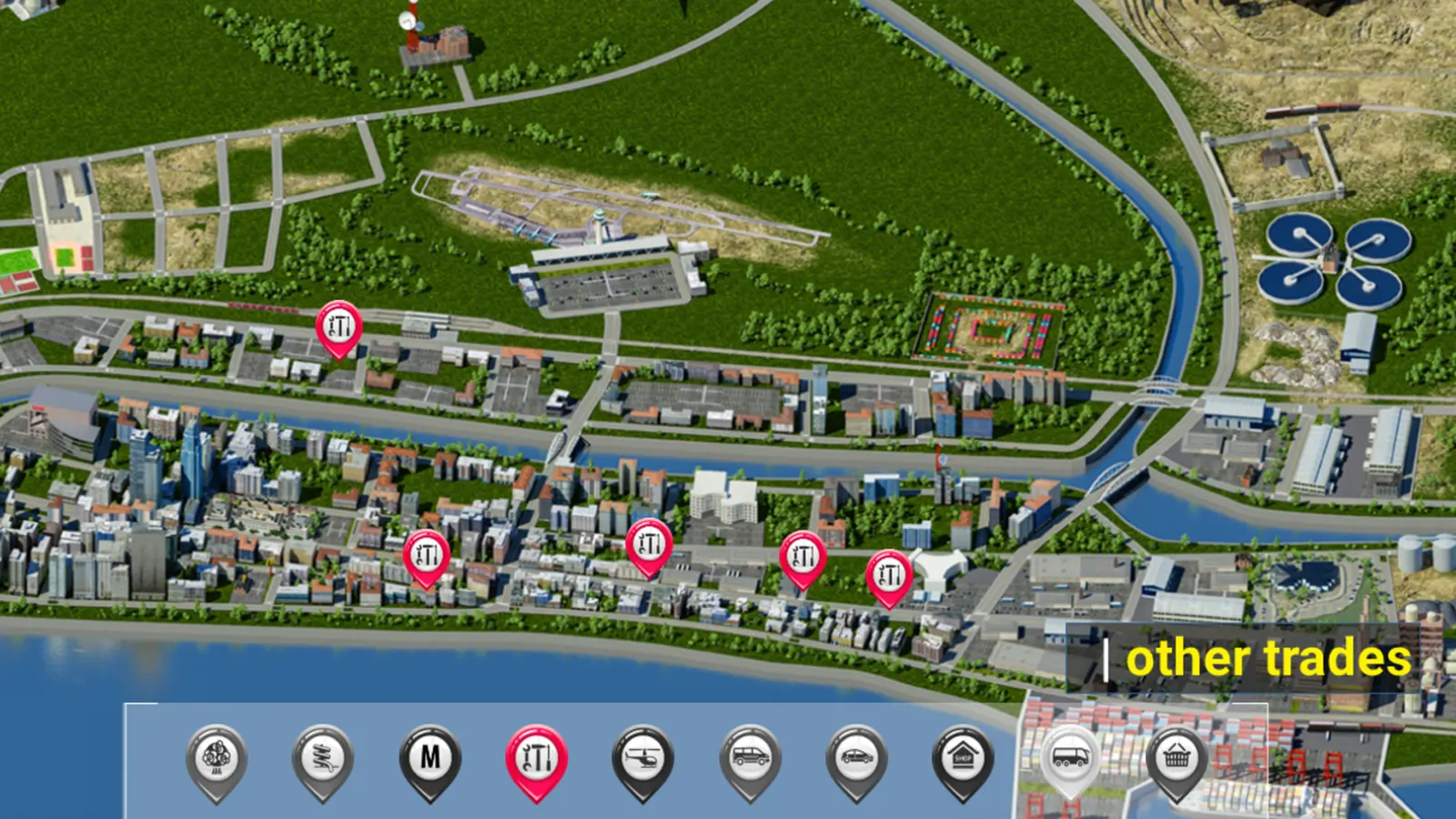
Recovered Pathways artefacts showing the non-linear wireframe, comparable industry data, category-filtered workplace map and persistent visual exploration modes used to support a facilitator-led careers conversation.
Read the analysis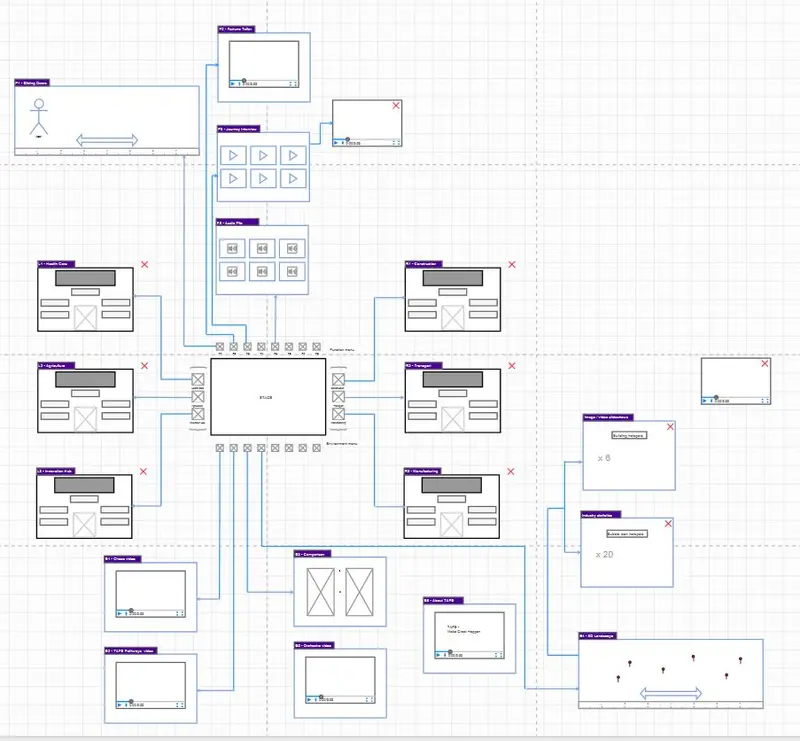
01 · Structure before surface
A hub, not a funnel
The recovered wireframe shows the modes connected around a hub rather than arranged as one required sequence. That structure makes it possible for a facilitator to move with the conversation instead of advancing a prescribed lesson.
02 · Shared reference points
Comparable industry data
The same categories are positioned consistently across industries, creating reference points a facilitator and group can compare together. The dynamic statistic treatment was implemented at SkillsTech’s request using JavaScript.
03 · Spatial exploration
Put careers into an environment
Changing the career category changes the pins while the environment remains recognisable. The map gives the adviser something visual to ask about: where the work happens, what sits near what, and how one career differs from another.
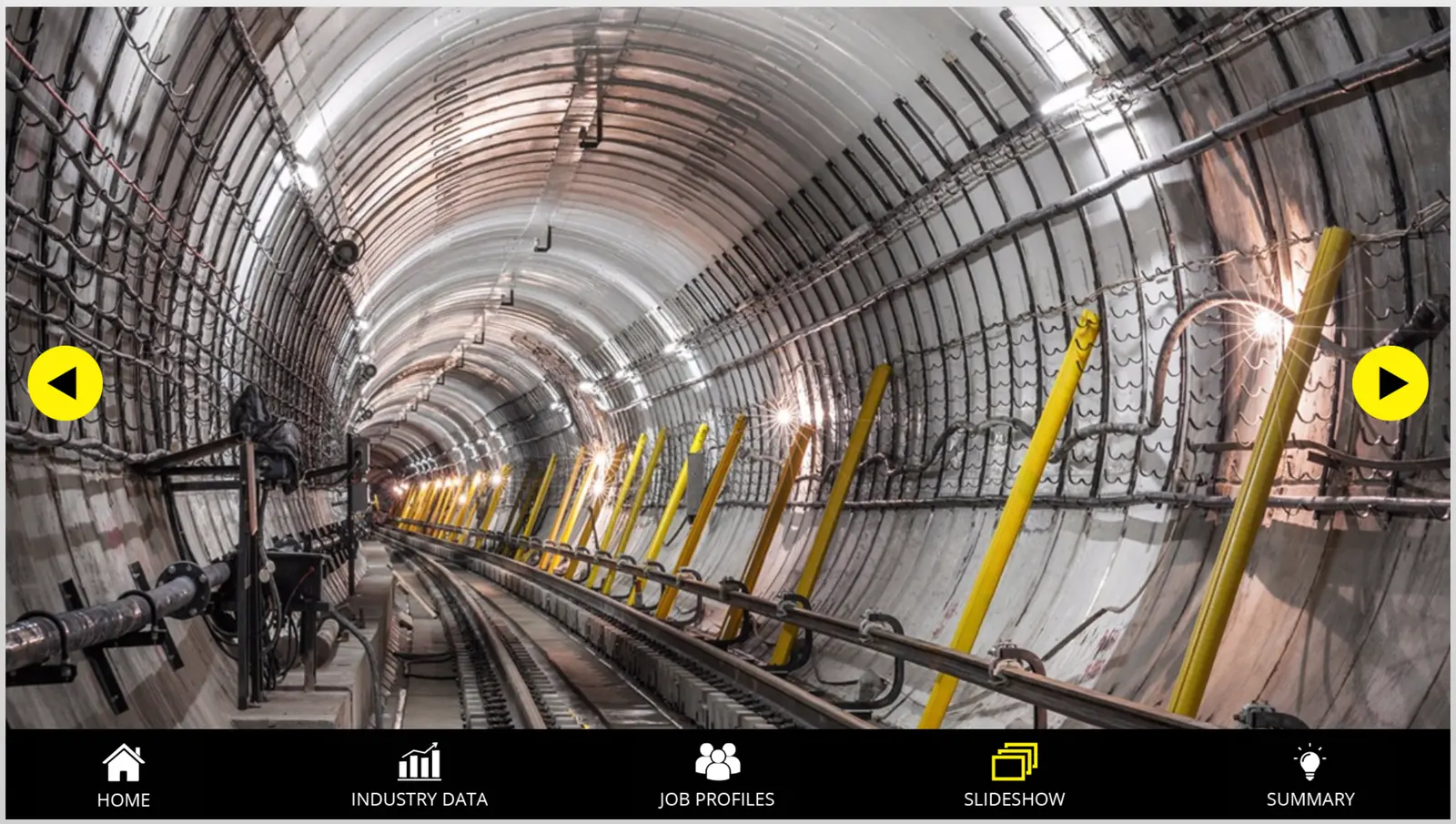
04 · Workplace context
Let the environment carry part of the explanation
Workplace imagery adds scale and environment that salary or course data cannot. Because navigation persists, the facilitator can move from a visual prompt back into data or job profiles without resetting the session.
What changed in the analysis
An older portfolio description characterised Pathways as self-directed. The later editorial inventory corrects that interpretation: it was designed for facilitator-led Years 8–9 school sessions supporting a careers adviser’s conversation. This artefact follows that newer evidence.
Evidence treatment
Each historical interface image is presented with responsive sources, intrinsic dimensions, descriptive alt text and contemporary editorial framing. The original visual treatment is preserved rather than redesigned.
The recovered interface screens are historical evidence. No attempt is made to redesign their typography, colour, navigation or visual style.