Safetyhub · Workplace safety
Safety learning where the footage is the content.
Asbestos awareness has one job: a worker has to recognise the material in a building they have never been in before. That makes photography and video the substance of the course rather than its decoration.
01
In 60 seconds
- The problem
- A worker has to identify a hazardous material by sight, in an unfamiliar building, having read about it once.
- My role
- Learning design and development. Editorial placeholder: Confirm the extent of the video-production role
- Scope
- Learning design, video-led content treatment, question and feedback design, and course build.
- Where it got to
- An asbestos awareness course. Editorial placeholder: Add measurable outcome Editorial placeholder: Confirm whether the course was published and to whom
- Built with
- Editorial placeholder: Confirm authoring tool
The situation
Asbestos awareness is a recognition task before it is a knowledge task. The learner does not need to recite the regulation; they need to look at a wall and know whether to stop work.
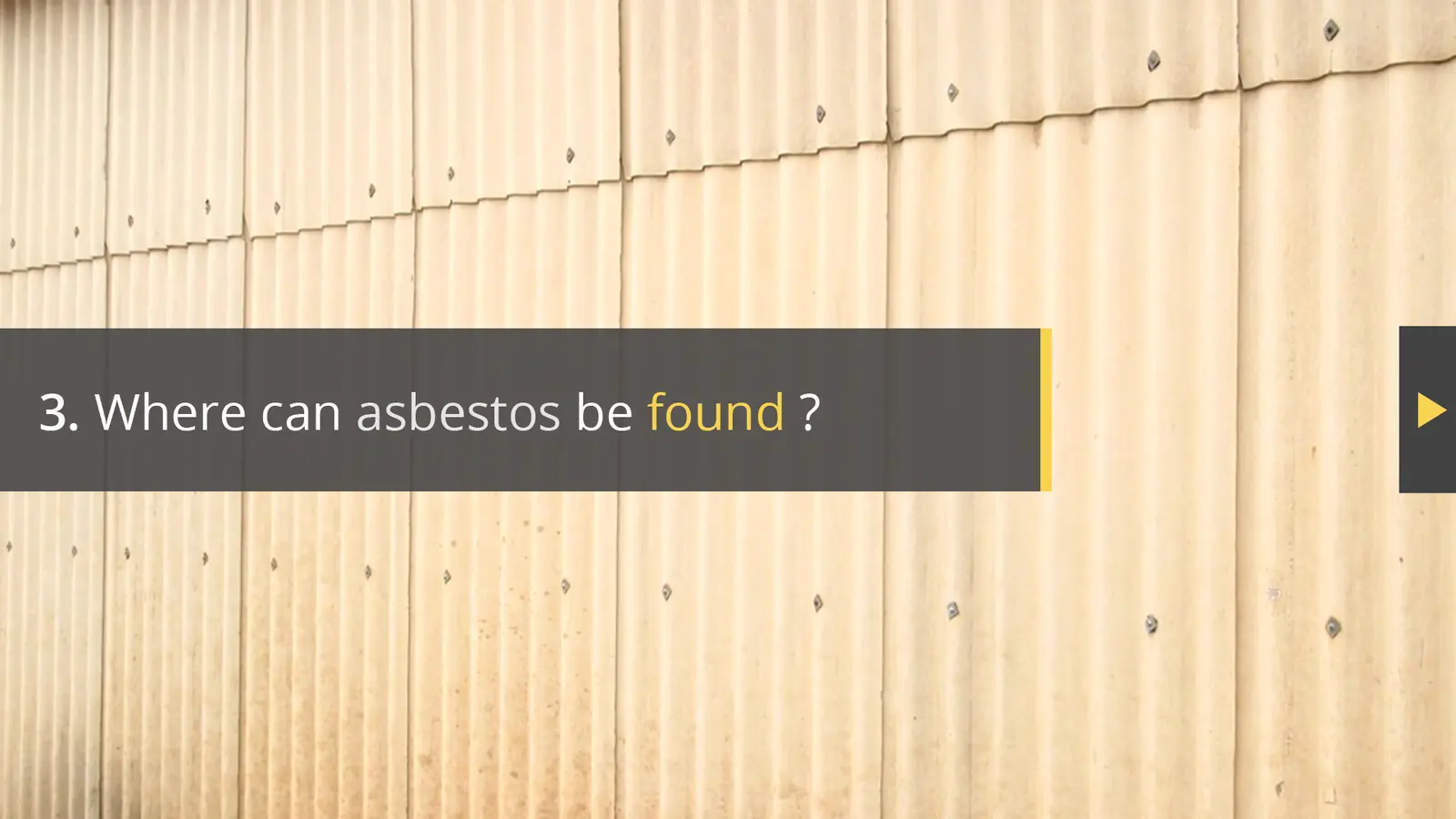
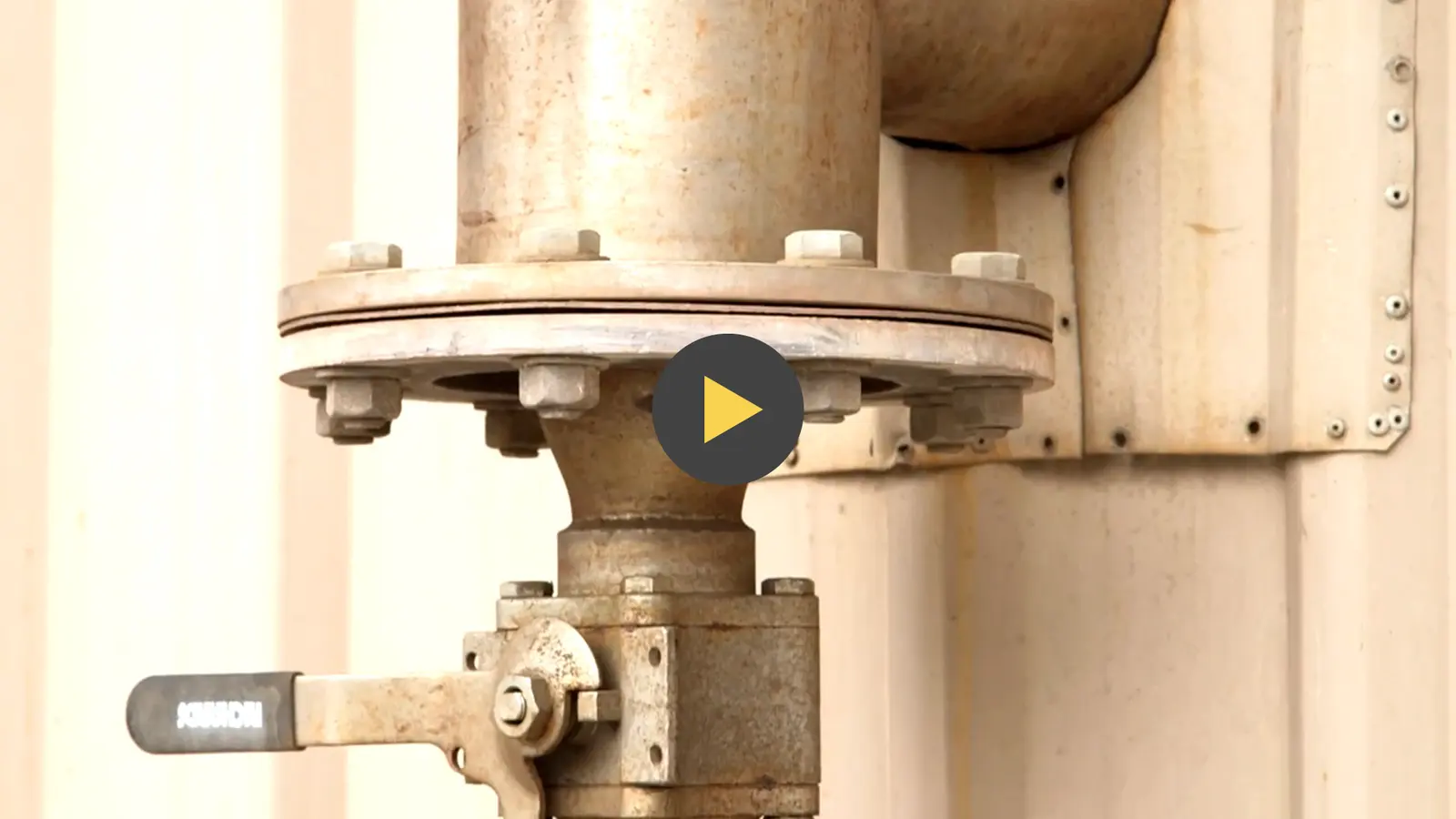
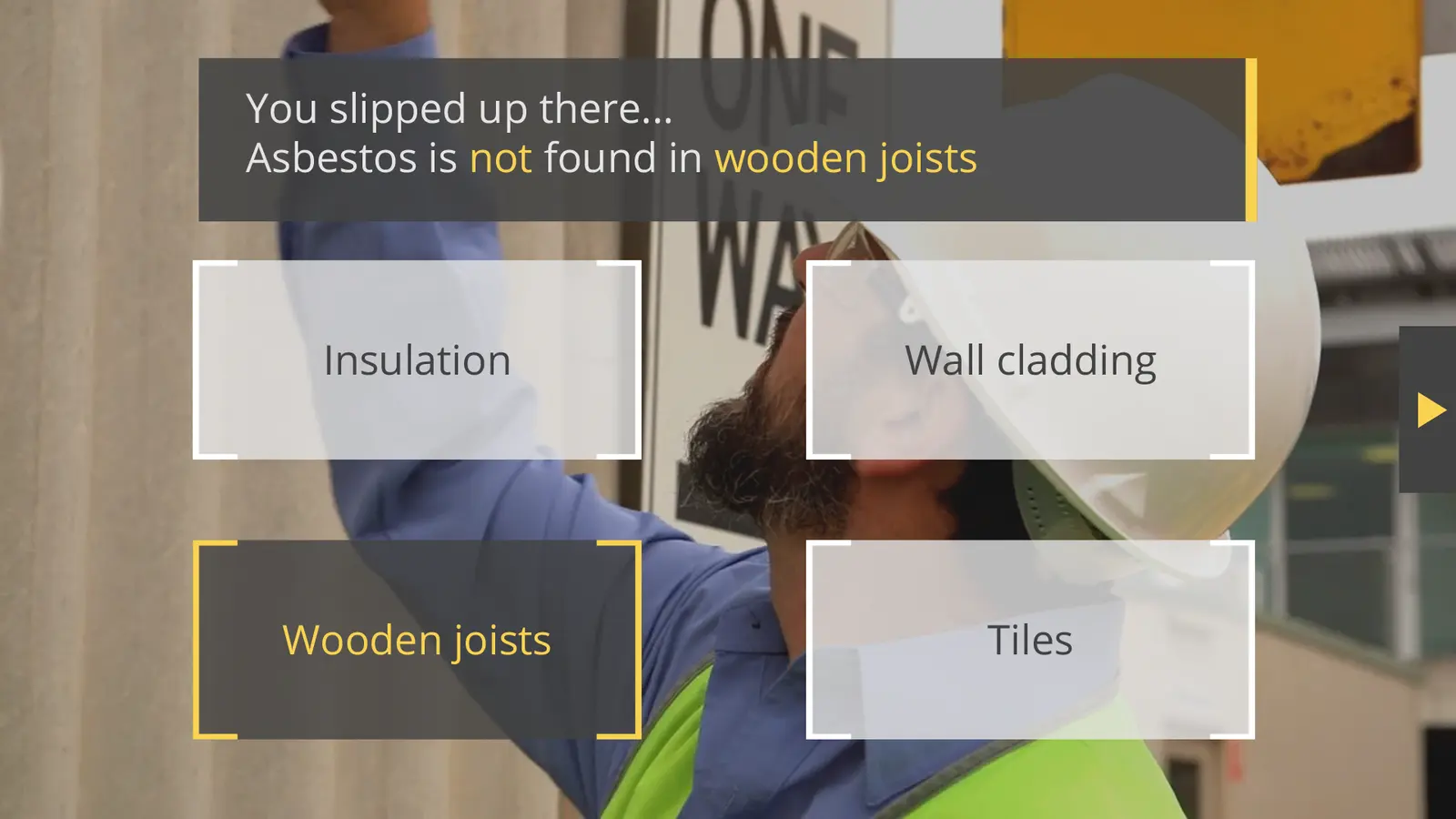
The recovered screens are consistent with that: the interface furniture is minimal, the imagery is real material in real buildings, and the questions are asked over the surfaces they are about.
What was actually wrong
Safety courses default to text on a stock background, then test the text. The recognition problem survives that treatment completely intact.
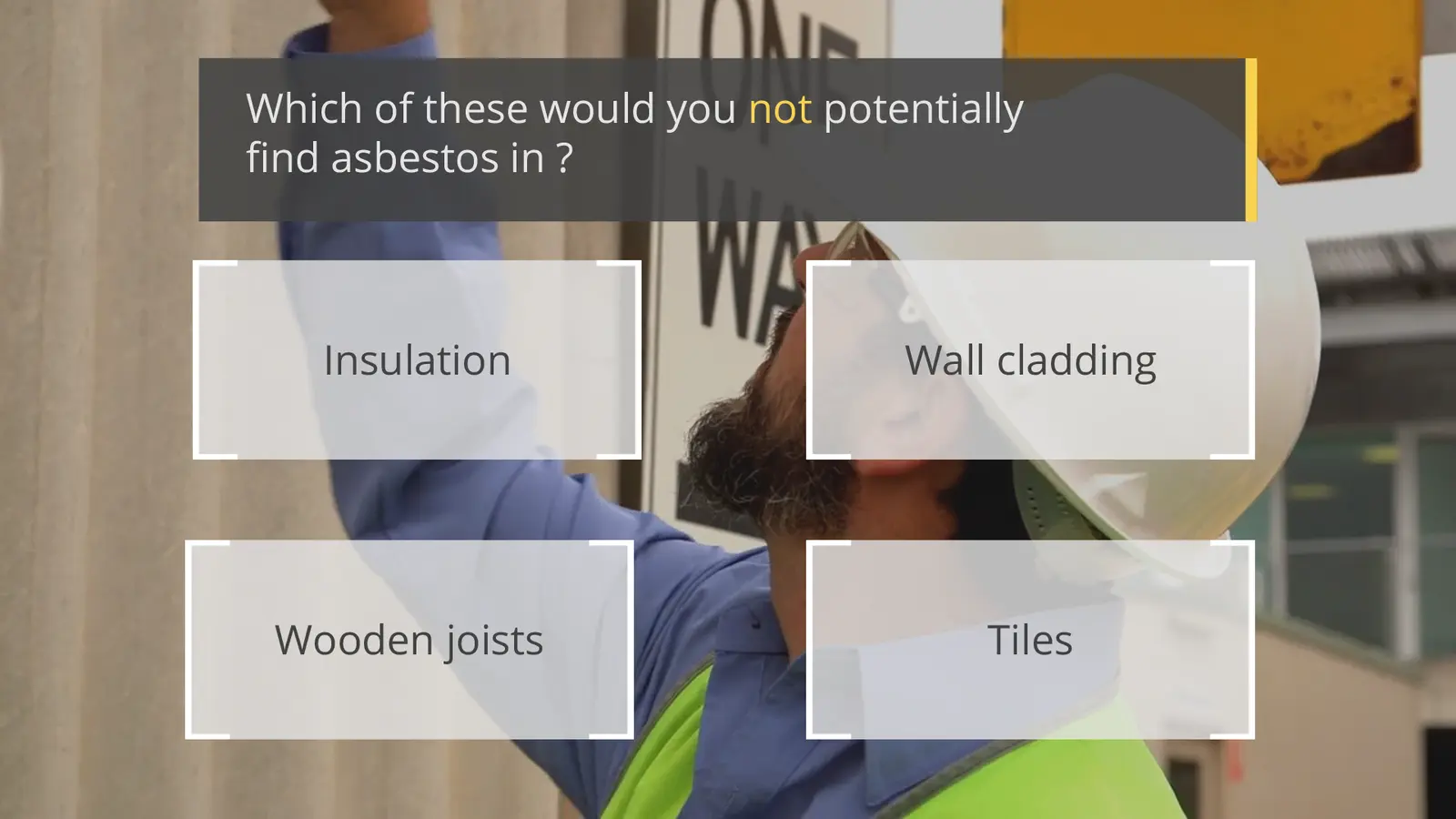
Here the composition is inverted. The photograph occupies the frame, and the question sits in a narrow band over it. The learner is looking at the material while answering a question about the material, which is closer to the moment the training is for.
What it looked like, and why
02Content design
03Multimedia
04Learning experience
Where it got to
- An asbestos awareness course built on real site photography and video
- A recognition-led question pattern using full-frame material imagery
- Feedback presented alongside the original question rather than replacing it
- Editorial placeholder: Add measurable outcome
- Editorial placeholder: Confirm whether the course was published and to whom
No completion, evaluation or distribution data has been supplied for this project, and none is claimed.