Civil Aviation Safety Authority · 2015–2021
Six years designing learning platforms and digital learning for CASA.
Long enough inside one regulator to design the platforms, the courses that ran on them, and the production system that let a team keep building after I stopped.
01Platforms
In 60 seconds
- The problem
- A safety regulator with learning obligations across two internal platforms, several distinct audiences and a design team that needed to produce at volume without producing inconsistency.
- My role
- eLearning Specialist, in-house, across six years.
- Scope
- LMS front-end design and development for two internal platforms, course and catalogue information architecture, instructional and assessment design, a reusable Storyline production system, and in-house video and livestream production.
- Where it got to
- Two internal learning platforms with front ends I designed and built, a national flight examiner program, and a production system the regulator's design team used after I left.
- Built with
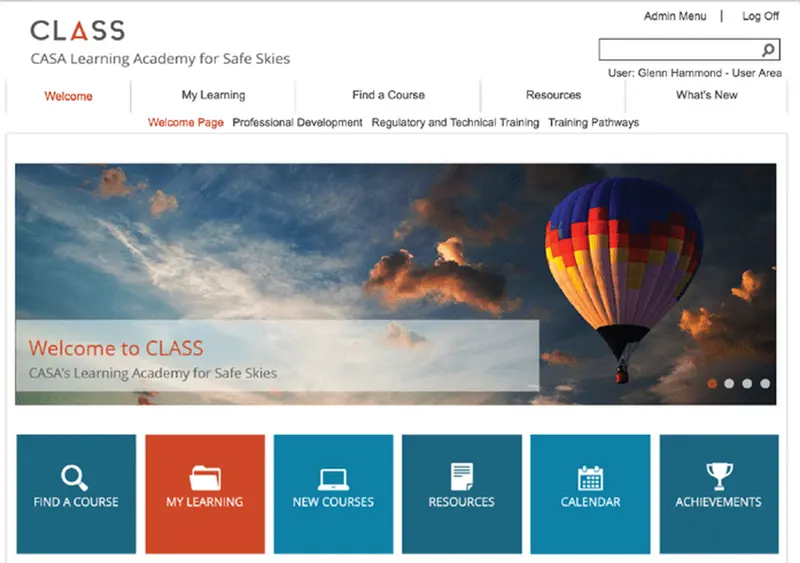
- Articulate Storyline · Adobe CC · AviationWorx · CLASS
The situation
CASA regulates civil aviation safety in Australia. Its learning obligations run in several directions at once: technical and regulatory training for its own inspectors and examiners, corporate and leadership development for its wider workforce, and process learning for the systems staff use every day.
Those audiences do not want the same thing, do not have the same time, and in several cases were not even on the same platform. Over six years I worked across the whole of that estate rather than on any one part of it.
What was actually wrong
It is tempting to describe six years as a list of courses. That is the wrong unit. What actually accumulated was a set of connected systems: platforms that had to hold content, catalogues that had to make content findable, and templates that had to make content producible.
The through-line is that each layer was designed so the next one did not have to be improvised. A course template exists so the catalogue is consistent. A catalogue exists so the platform is navigable. A platform front end exists so a busy inspector can find the one thing they came for.
My role, and who else was involved
I designed and developed the LMS front ends for both internal platforms, designed course and catalogue information architecture, wrote and built learning and assessment, produced video and livestreams in house, and created the reusable Storyline production system used by the wider instructional design team.
- CASA subject-matter experts, including flight operations inspectors and delegated flight examiners
- The internal instructional design team, who authored courses against the production system
- Editorial placeholder: Confirm which internal team owned each platform and who else worked on the front ends
Multimedia and production, across the program
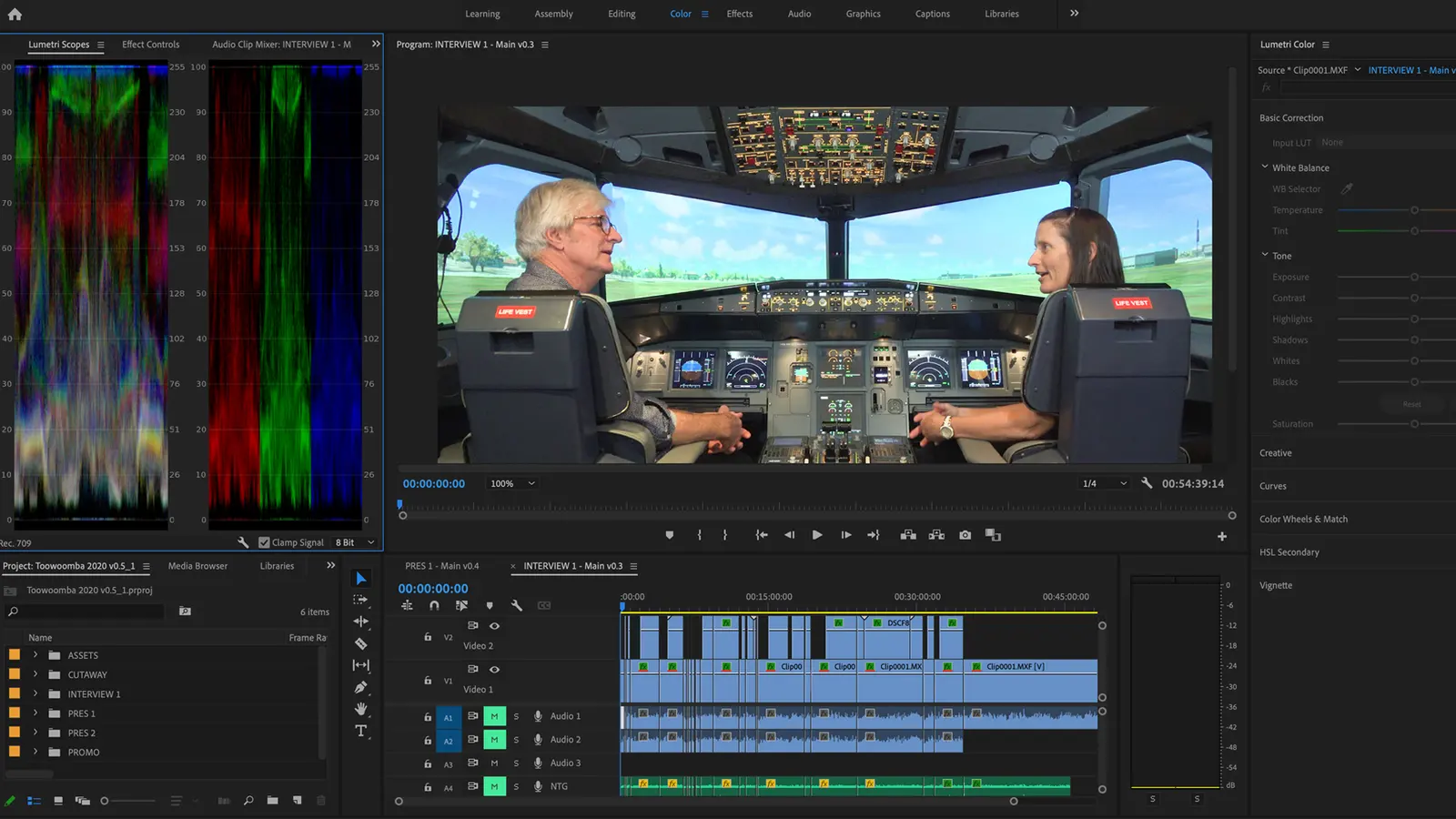
Two capabilities ran underneath everything else. Being able to author and to shoot in house changes what can be designed, because a scenario can be written for footage that is actually obtainable.
02Multimedia
03Production systems
What the six years contained
Grouped by body of work rather than by date. Only the engagement period and the March 2021 filming date are firmly evidenced; individual project dates are unconfirmed.
Platforms
LMS front-end design and development for the two internal learning platforms.
Structure
Making a large and role-specific body of learning findable by the right people.
Production
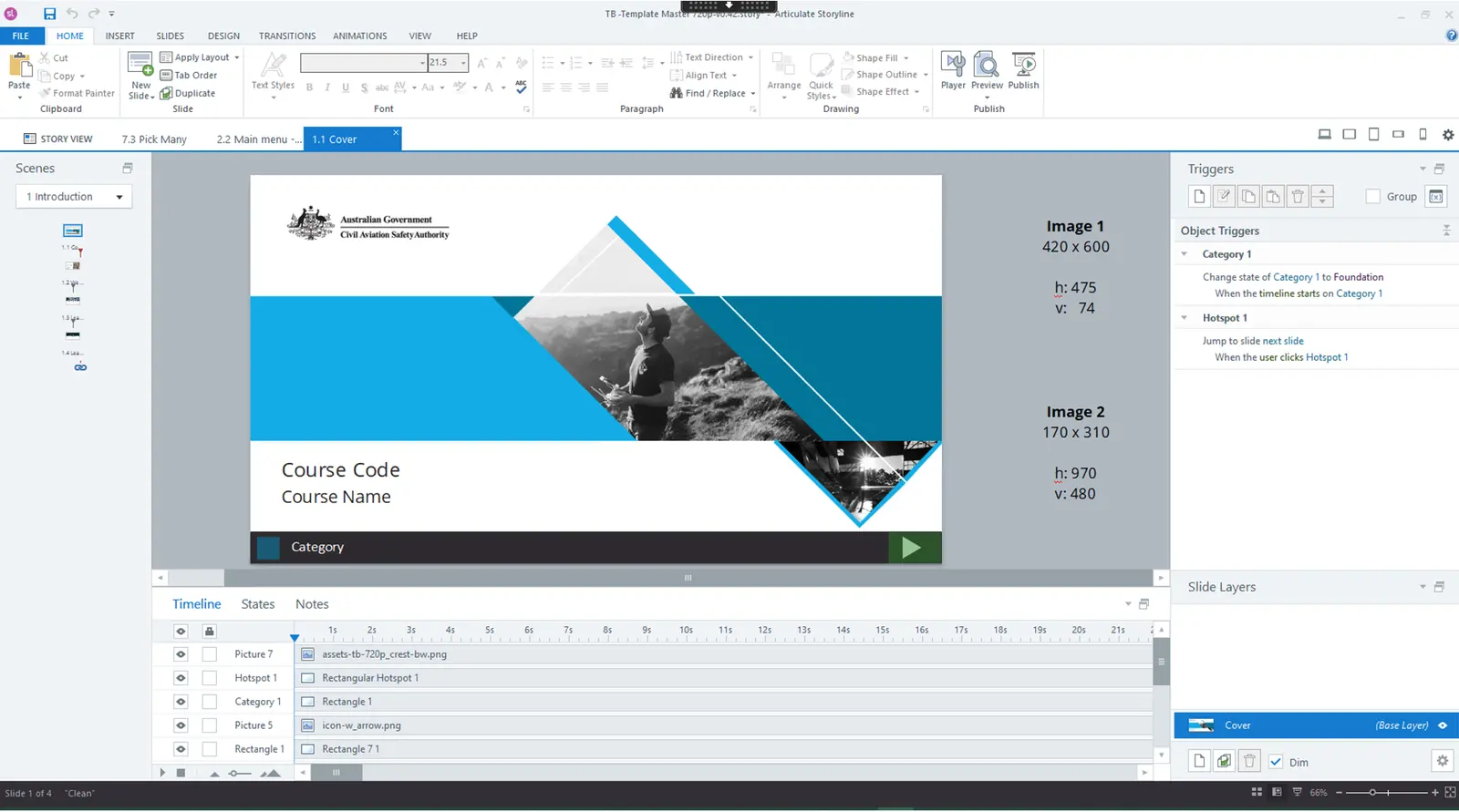
The template, component and asset system the design team built courses from.
Programmes
The national examiner program built on top of all of it.
The five projects
Related, but not the same work. Each has its own audience, its own constraints and its own evidence, and each says plainly where that evidence stops.
- Image to supplyAviationWorx platform home
AviationWorx
The first of two internal CASA learning platforms whose learner-facing front end I designed and built.
- Image to supply
CLASS
An internal CASA learning platform whose front end reduces the distance between signing in and starting the course you came for.
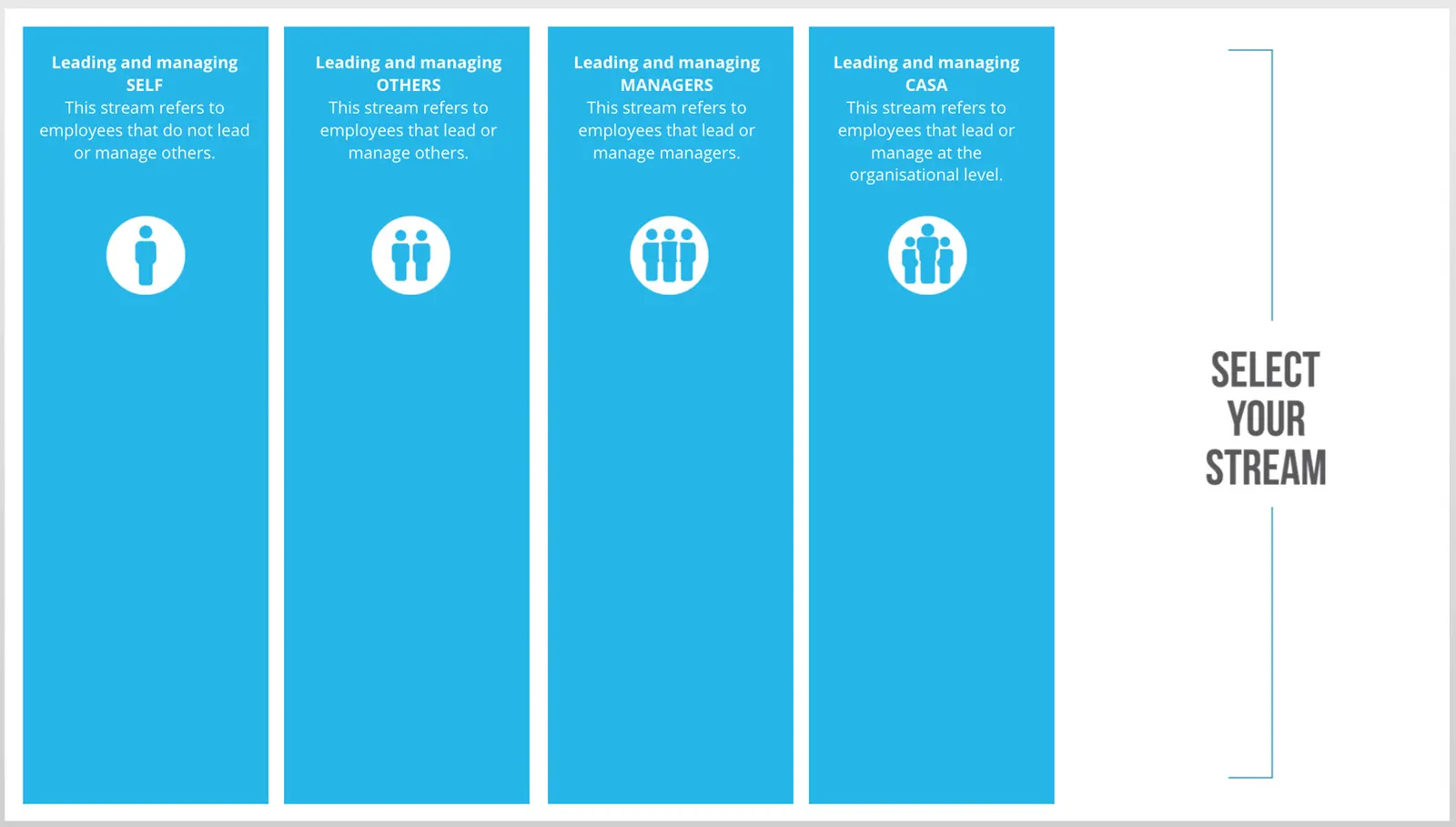
Role-based learning catalogue
Four leadership streams, defined by who a person is responsible for, used as the entry point to a large body of role-specific learning.
Storyline production system
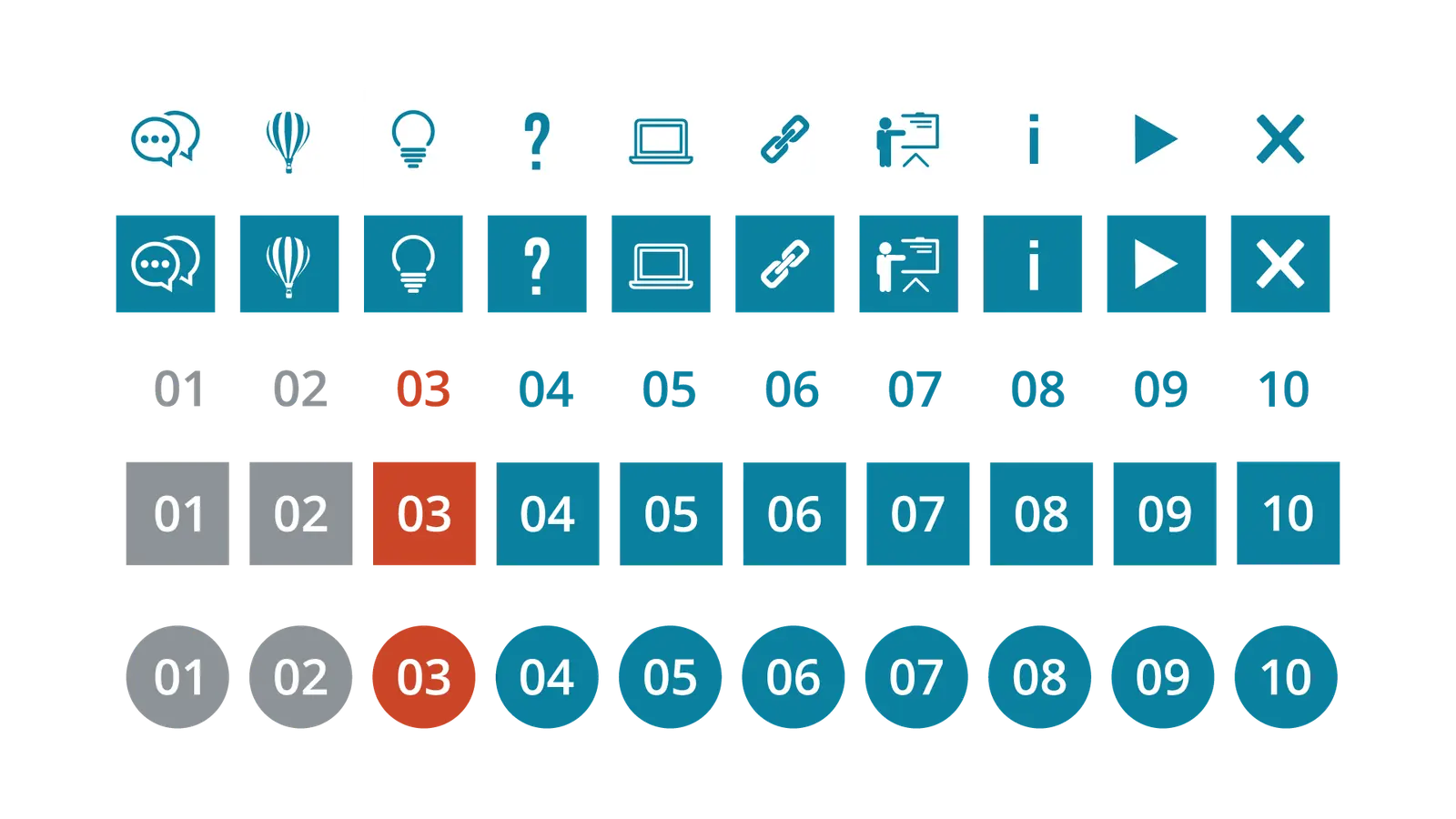
The style manual, templates, component specifications and asset libraries that let several designers produce work that looked like one program.
Flight Examiner Rating
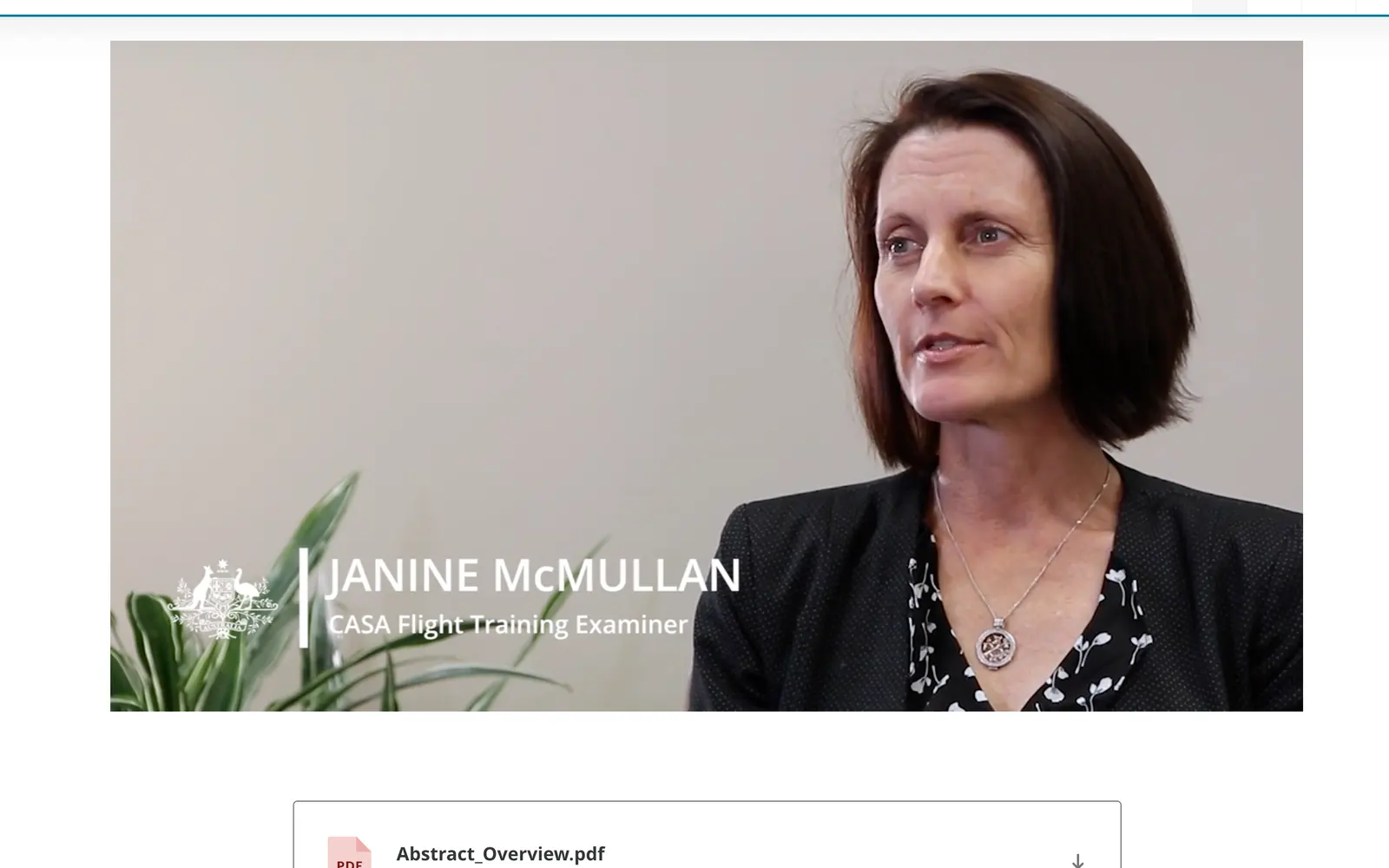
The national Flight Examiner Rating course and professional development program, for air transport, helicopter and general aviation examiners.
Where it got to
- Designed and developed the LMS front ends for AviationWorx and CLASS, two internal CASA learning platforms
- The Australian Flight Examiner Rating Course and Professional Development Program, for air transport, helicopter and general aviation examiners
- A reusable production system for the regulator's design team: style manual, Storyline, PowerPoint and InDesign templates, component specifications and an icon library
- In-house video and livestream production, including interviews, scenarios and presentations
Audience numbers, completion data and evaluation results are not published and are not claimed here.
What I would do differently
The production system outlasted the courses. Six years on, the part of this work I would defend hardest is not any single module. It is that a team could produce consistent regulated learning without me in the room.